How long does a tooth gem actually last?
It is the question we get more than any other, and the honest answer is that it depends on what your gem is made of. A crystal and a solid gold piece behave completely differently on the tooth, and the difference is bigger than most people expect. Here is what we have seen across more than 25 years of supplying dental jewelry.
Why crystals have a shorter life
Crystals get their sparkle from a thin foil backing behind the glass. It is what makes them catch the light, and it is also the reason they have a shorter life on the tooth than gold does.
If only the back of a crystal is bonded, the foil can separate from the glass over time. That is why the sides of the crystal need to be covered in composite during application, and why the person applying it matters so much. Done properly, a crystal will usually stay put for three to six months. Whitening treatments can also affect the colour of a crystal, so keep that in mind if you are planning both.
Why gold stays on longer
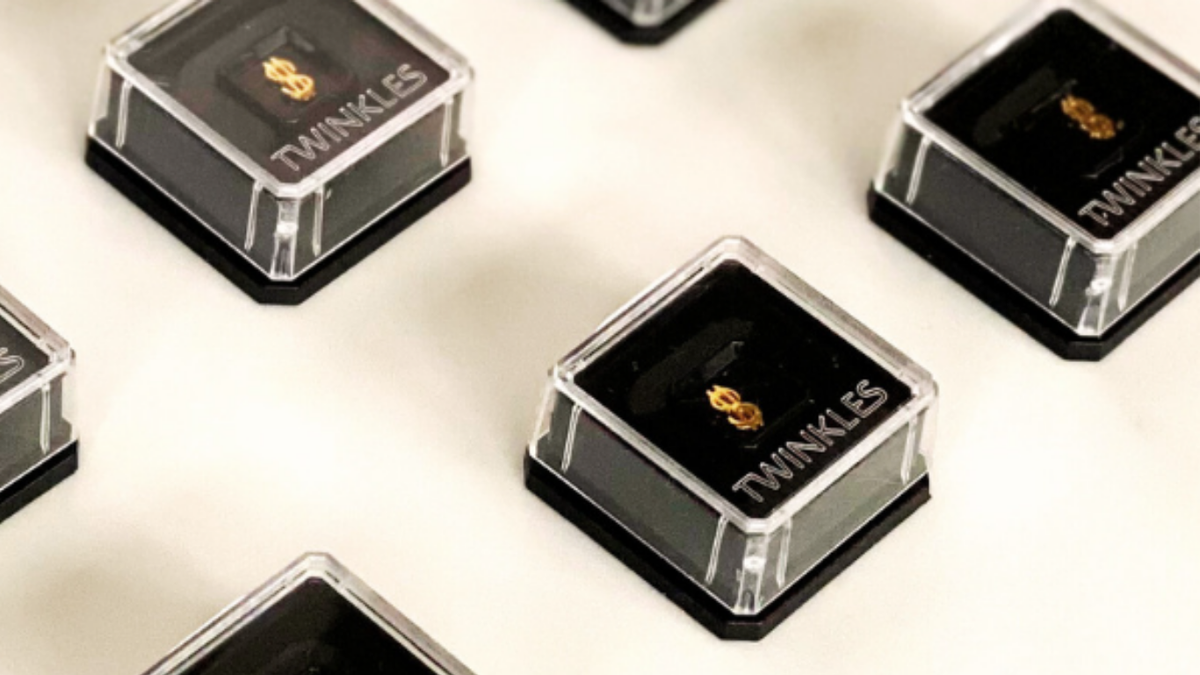
Solid gold behaves differently. There is no foil, no layered construction and nothing to separate, so a gold gem is held purely by the bond underneath it. In practice that means six months at minimum, often several years, and frequently until you decide you want it gone. We have customers who have worn the same piece for decades. Because our gems are solid gold rather than plated or coated, there is no surface layer to wear through or discolour along the way.
What actually decides the lifespan
The single biggest factor is how the gem was bonded. A poor bond fails fast, usually within the first week, and a good one lasts far longer than any guarantee period. There is no slow decline in between.
Placement matters too. A gem on a tooth that takes more contact when you chew has more working against it than one placed further back or higher up. Your own habits play a part as well, including how hard you bite down and whether you grind your teeth.
And it only works on a real, live tooth. Porcelain caps, crowns and veneers are much harder to etch, so the adhesive generally will not hold on them. Some clinics may still be able to help, so ask locally if that applies to you.
Making yours last longer
For the first few hours after application, avoid biting down hard on the gem. After that, treat it like any other part of your smile. Brush as normal and keep up your regular cleaning between teeth. Do not pick at it with fingernails or anything hard, since that puts pressure on the edge where the bond is. If a gem does come off and there is still composite on the back of it, it cannot be re-used.
Regular dental checkups are still fine with a gem in place, and so is professional cleaning. Ready to find yours? Browse the collection and add a little extra sparkle to your smile.